Looking at Rochester and wondering why one part feels like a walkable historic town while another feels more suburban and modern? That difference is real, and it matters when you start comparing homes, lot sizes, and price points. If you want to understand how Rochester’s neighborhoods and home styles fit together, this guide will help you shop with more clarity and confidence. Let’s dive in.
Rochester has distinct housing pockets
Rochester is a compact city of about 3.8 square miles, first settled in 1817, but it does not feel like one uniform housing market. City planning materials describe tree-lined streets, a range of home styles, and continued infill over time.
A helpful way to think about Rochester is in three parts. You have the historic downtown core, a ring of near-downtown in-town streets, and newer, more contemporary areas as you move east, especially into the northeast portion of the city. That layout helps explain why two homes with the same city name can feel very different in style, lot size, and everyday lifestyle.
Downtown Rochester home styles
Downtown Rochester has the strongest historic identity in the city. The historic core is centered along Main Street between Third and University, with Walnut Street helping form part of the older downtown pattern.
City materials describe commercial buildings here with storefront lower facades, large display windows, symmetrical upper windows, flat roofs, and decorative parapets. That consistent architectural pattern is part of why downtown feels visually cohesive and distinctly older than other parts of the city.
On the residential side, the downtown area tends to offer some of Rochester’s most architecturally distinct homes. Current examples point to a mix that includes Craftsman bungalows, Colonial homes, Tudors, English Cottage style homes, and newer brownstone-style infill.
If you love homes with personality, downtown is often where that appeal is strongest. You are more likely to see details tied to older design patterns, along with selective replacement and infill that adds newer options without fully changing the area’s historic feel.
What downtown lots feel like
Downtown lot sizes are usually modest by suburban standards. Current examples include lots around 6,098, 7,405, 8,712, and 9,757 square feet, which reflects a tighter in-town pattern.
In practical terms, that often means closer-set homes, more compact streets, and less extra yard space than you may find on the city’s outer edges. For many buyers, that tradeoff is worth it for the location and the neighborhood character.
Downtown price range
Current downtown pricing spans a fairly wide range. Smaller condos or entry-level units can start around the mid-$200,000s, while luxury or custom downtown properties can rise well above $1 million.
That spread shows how much location and property type matter in Rochester. A condo near the center of town and a custom single-family home in the same general area may serve very different buyers even though they share the same walkable setting.
Near-downtown in-town neighborhoods
If you want Rochester character without being right in the busiest part of downtown, the near-downtown neighborhoods are often worth a close look. The city specifically calls out the Griggs/Albertson neighborhood and the North Main Street corridor as important focus areas.
These areas sit at the meeting point of single-family homes, downtown access, and gradual change over time. The city’s planning approach emphasizes protecting nearby residential blocks while allowing selective, compatible redevelopment in certain places.
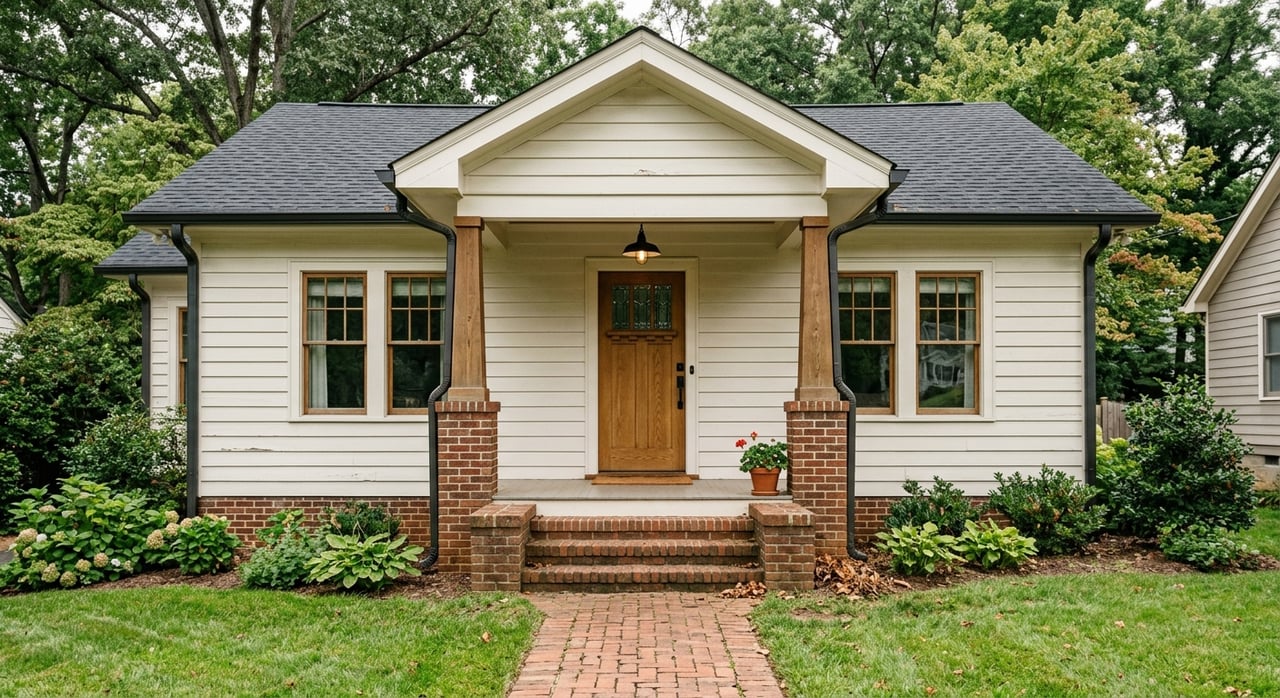
For buyers, this part of Rochester often feels like classic small-city living. You may find older detached homes, front porches, manageable yards, and convenient access to downtown without being on the most active streets.
Common home feel in these pockets
Current examples in this in-town band include older homes from the early 1900s on lots around 6,098 and 7,405 square feet, plus larger updated properties that command higher prices. That mix creates a middle ground between downtown charm and a more residential setting.
If your priority is to be close to Main Street, Municipal Park, or the Paint Creek Trail without giving up a quieter block, this part of the city may feel like a strong fit. It often appeals to buyers who want walkability and character but not necessarily the tightest downtown setting.
Near-downtown price range
A practical broad price band for these in-town neighborhoods is roughly the mid-$400,000s to the high-$700,000s. Standout homes with larger footprints, strong updates, or especially desirable walkable locations can push above that range.
Recent examples include homes around $465,000, $649,000, and $769,000. That gives you a useful snapshot of what the market may look like when you move just beyond the downtown core.
East and northeast Rochester homes
As you move east of Letica Drive, especially into the northeast portion of the city, Rochester becomes more contemporary and suburban in feel. The city’s master plan draws a clear contrast between early-1900s housing fabric and newer single-family homes with more modern layouts.
This is where you are more likely to see designs associated with newer suburban living, including side-entry garages and less compact street patterns. The visual shift can be noticeable if you have just come from the older in-town sections.
What buyers often find here
Current listings in these areas include homes built in the 1990s and 2010s, plus edge-of-city estate properties on two acres or more. Compared with downtown, these homes often offer layouts that feel more current, along with larger garages and more privacy.
For some buyers, that is the best match for everyday life. If you want more separation between homes, a bigger lot, or a newer floor plan, the east and northeast side of Rochester may align better with your goals.
Rochester condos and low-maintenance options
Not every Rochester buyer wants a detached house. If low-maintenance living is a priority, condos and townhome-style options can open the door to a more flexible lifestyle, especially near downtown.
Current examples show downtown condos and similar lower-maintenance options ranging from about $154,000 to roughly $600,000 depending on size and location. That gives buyers a way to access Rochester at several price points while reducing exterior upkeep.
This option can make sense if your top priorities are simplicity, location, and ease of ownership. It can also be useful if you want to stay close to downtown amenities without taking on the maintenance demands of an older single-family home.
Parks, trails, and daily lifestyle
When you compare Rochester neighborhoods, home style is only part of the picture. Two of the city’s most important lifestyle anchors are Municipal Park and the Paint Creek Trail, both of which help shape how buyers think about location.
If walkability, green space, and quick access to outdoor recreation matter to you, homes closer to these amenities may stand out. Buyers who want that connected, in-town feel often focus first on access to Main Street, the park, and the trail, then narrow down by home style and budget.
How to choose the right Rochester area
The best Rochester neighborhood for you depends on what you want your day-to-day life to feel like. Start with lifestyle first, then match it to architecture, lot size, and price.
Here is a simple way to think about it:
- Choose downtown if you value walkability, older architecture, and close access to Main Street, Municipal Park, and the Paint Creek Trail.
- Choose near-downtown streets if you want character and convenience with a slightly calmer, more residential feel.
- Choose east or northeast Rochester if you want newer layouts, more privacy, or larger lots.
- Choose a condo or townhome if low-maintenance living is more important than yard space.
What the market means for buyers
As of March 2026, Rochester’s median sale price was $523,500 and homes averaged 11 days on market. That suggests buyers should be prepared for competition, especially when a home combines location, updates, and a desirable lot size.
In a market like this, it helps to know your must-haves before you start touring. A buyer looking for a historic bungalow near downtown is shopping in a very different lane than someone searching for a newer home on a larger lot, even within the same city.
That is why neighborhood-level guidance matters. When you understand Rochester as a collection of different housing pockets rather than one single market, it becomes much easier to focus your search and act quickly when the right property appears.
If you are weighing Rochester against nearby southeast Michigan suburbs, or trying to decide which part of Rochester best fits your goals, working with a local advisor can save you time and keep your search grounded in the details that actually affect value.
If you want help narrowing down the right Rochester area for your budget and lifestyle, reach out to Kevin Paton for clear, local guidance.
FAQs
What are the main neighborhood types in Rochester, MI?
- Rochester is best understood as three main housing pockets: the historic downtown core, near-downtown in-town residential streets, and newer more suburban areas to the east and northeast.
What home styles are common in downtown Rochester?
- Downtown Rochester commonly includes architecturally distinct homes such as Craftsman bungalows, Colonials, Tudors, English Cottage style homes, and some newer brownstone-style infill.
Are lots smaller in downtown Rochester?
- Yes. Downtown lots are usually modest by suburban standards, with current examples around 6,098 to 9,757 square feet.
What price range should buyers expect in Rochester, MI?
- Price varies by neighborhood and property type, with downtown condos or entry-level units around the mid-$200,000s, near-downtown single-family homes often from the mid-$400,000s to high-$700,000s, and some luxury properties above $1 million.
Where can buyers find newer homes in Rochester?
- Buyers looking for newer layouts and a more suburban feel often focus on areas east of Letica Drive, especially in the northeast part of the city.
Is Rochester a competitive housing market?
- As of March 2026, Rochester had a median sale price of $523,500 and homes averaged 11 days on market, so desirable homes can move quickly.